Helmwhelp Guide: Evolution, Stats, and Best Builds
Master Helmwhelp in Aniimo. Learn its evolution into Helgon or Infergon, best build, stats, and how to find this Wind-type Break specialist in Russet Highlands.
Published:
Table of Contents
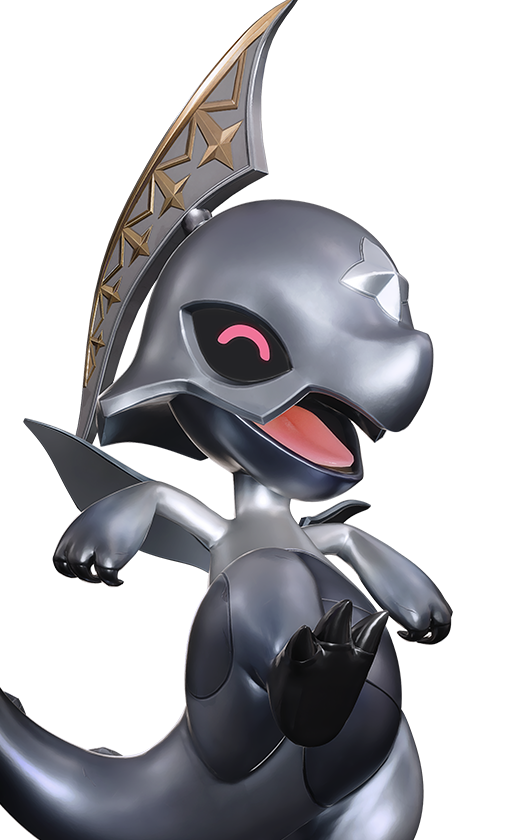
Helmwhelp is a reliable Wind-element Aniimo specializing in the Break role. Known for its sturdy helmet and defensive capabilities, it serves as a frontline combatant capable of softening up tough enemies for your team to finish off. Whether you are navigating the Russet Highlands or tackling challenging boss encounters, this Aniimo is a cornerstone of any effective Break-focused roster.
</img>
This guide covers everything you need to know about optimizing your Helmwhelp. From its branching evolution line into Helgon or Infergon to the specific gear and team compositions that maximize its Counter Strike trait, we provide the data-dense breakdown required for high-level play. Discover how to effectively evolve your companion and master its unique Bilateral mobility skill today.
Helmwhelp profile and stats
Helmwhelp (No. 065) is a Wind-element Aniimo that serves in the Break role. Described as a fledgling creature that conceals its vulnerability beneath a sturdy helmet, it dreams of gaining the strength required to soar freely. In the wild, it is primarily found in the Russet Highlands. Beyond its standard appearance, Helmwhelp possesses a regional Mountain form, which it shares with other creatures like Jawling and Helgon.
The creature utilizes the "Bilateral" mobility skill, allowing it to enter a special mode to perceive its surroundings from a different perspective. Its primary trait is "Counter Strike," a passive ability that increases its BREAK efficiency by 25% for 10 seconds whenever it is attacked. Combat-wise, it relies on two main skills: "Wind Tackle," which deals damage, knocks back small targets, and grants a 15% damage reduction for 10 seconds, and "Overcharged Claw Strike," a standard melee attack.
Helmwhelp’s base stat total is 489. Its distribution emphasizes durability and breaking power, making it a reliable front-line choice for players focusing on staggering opponents.
Stat
Value
HP
94
BREAK
92
ATK
78
M.DEF
61
P.DEF
88
REGEN
76
As a creature in the middle of a branching evolution line, Helmwhelp evolves from Jawling at level 38. Upon reaching level 48, it can further evolve into either Helgon or Infergon, depending on the specific requirements met by the player. These evolutions are permanent, so players are encouraged to raise multiple copies if they wish to utilize both branches.
Traits and passive abilities
Helmwhelp operates as a Wind-element creature assigned to the Break role, relying on its hardened physical armor to weather enemy onslaughts while shattering defenses. Its native mechanics consist of a reactive battle passive and an exploration-based mobility ability.
The cornerstone of Helmwhelp's combat style is its passive trait, Counter Strike. Whenever Helmwhelp sustains an attack from an opposing unit, the trait activates immediately, raising its Break efficiency by 25% for a full 10 seconds [INDEX: 1]. With high baseline defensive stats and a Break stat of 92, Helmwhelp is built to absorb frontline strikes [INDEX: 1]. Receiving damage triggers Counter Strike seamlessly, allowing players to capitalize on incoming enemy pressure to speed up the stagger process against formidable foes listed in the creature dex [INDEX: 1].
Outside of battle, Helmwhelp offers the exploration mobility skill known as Bilateral [INDEX: 1]. When activated in the field, it enters Bilateral mode to view the environment from a completely different visual perspective [INDEX: 1]. This utility assists Pathfinders in scouting rugged cliffs, searching for hidden minerals, and navigating steep habitats such as the Russet Highlands where Mountain forms reside [INDEX: 0, 1].
Ability
Classification
Effect Description
Magnitude / Duration
Counter Strike
Passive Trait
Taking damage triggers a temporary bonus to Break efficiency [INDEX: 1]
+25% Break efficiency for 10 seconds [INDEX: 1]
Bilateral
Mobility Skill
Enters Bilateral mode to view the environment from a different perspective [INDEX: 1]
Toggled field effect [INDEX: 1]
Combining these two features gives Helmwhelp a distinct identity: Counter Strike turns incoming attacks into offensive gauge-breaking opportunities, while Bilateral delivers specialized viewpoint utility during open-world exploration [INDEX: 1].
Skill list and energy costs
Helmwhelp utilizes a unique set of abilities designed to support its role as a Break-focused combatant. Its kit emphasizes defensive utility and the ability to disrupt opponents during encounters. In addition to its standard skills, Helmwhelp possesses the Bilateral mobility trait, which allows the creature to enter a special mode to view the environment from a different perspective.
The following table details the core combat skills available to Helmwhelp. Please note that exact energy costs are subject to community-reported adjustments based on recent balance patches.
Skill Name
Energy Cost
Combat Effect
Wind Tackle
25 EP
Performs a physical tackle that knocks back small-sized targets; increases the user's damage reduction by 15% for 10 seconds.
Overcharged Claw Strike
40 EP
Delivers a powerful claw strike to a single target, dealing direct damage.
Players should incorporate these skills into their rotations strategically, particularly when facing tougher enemies. The damage reduction provided by Wind Tackle is essential for survivability, while the high-impact nature of the Overcharged Claw Strike allows Helmwhelp to effectively contribute to breaking an opponent's guard. Because Helmwhelp is a specialized Break-role Aniimo, timing these skills to coincide with the activation of its Counter Strike trait—which increases break efficiency by 25% for 10 seconds after taking damage—is considered the optimal strategy for maximizing its effectiveness in both open-world skirmishes and boss encounters. Be sure to manage your energy reserves carefully to ensure these abilities are available when the opportunity to break an enemy arises.
Evolution line and branching paths
The evolution process for this line begins with the mountain-dwelling Jawling. Upon reaching level 38, Jawling evolves into Helmwhelp, which serves as the base form for the subsequent branching path. Once the Aniimo reaches level 48, players can choose to evolve Helmwhelp into either Helgon or Infergon.
Because these evolution paths are permanent, it is recommended that players raise a second copy of Helmwhelp if they wish to obtain both final forms. Evolving requires the player to meet specific environmental or challenge-based criteria in addition to the requisite elemental stones.
The following table details the specific requirements for each evolution path:
From
Into
Level
Additional Requirements
Cost
Jawling
Helmwhelp
38
None
None
Helmwhelp
Helgon
48
Open 30 chests in the world cumulatively
Gust Stone x3
Helmwhelp
Infergon
48
Defeat Omega Infergon; Potential must reach Perfect rating
Blaze Stone x3
It is important to note that evolving an Aniimo preserves its current regional form. If a player wishes to evolve a specific regional variant into a form not currently in their collection, they must first use a Morph Orb to switch forms or capture the desired variant in the wild. All evolution stones required for these final stages are obtained by defeating Alpha bosses. Players should ensure their Pathfinder level and title rank are sufficient, as these impose caps on how high an Aniimo can level before evolution is permitted.
Where to find and catch
Helmwhelp is primarily found roaming the mountainous terrain of the Russet Highlands. Players looking to add this creature to their team should focus their exploration efforts on these high-altitude regions, where it frequently appears in its basic and specialized regional forms. While the standard Helmwhelp is a common sight in these environments, explorers may also encounter the Mountain form of this species, which shares the same primary habitat.
Beyond the Russet Highlands, community-reported data suggests that Helmwhelp populations, including their Mountain forms, are present in the Sea of Flowers and the Berylline Causeway. Because regional forms are tied to specific environmental conditions, players aiming to collect all variations should verify which specific variant occupies each zone.
Form
Primary Habitat
Basic
Russet Highlands
Mountain
Russet Highlands, Sea of Flowers, Berylline Causeway
When searching for Helmwhelp, keep in mind that its regional distribution is linked to the game’s broader ecosystem mechanics. If you are specifically tracking the Mountain form, prioritize searching the craggy peaks of the Russet Highlands, as they are the most consistent spawn points. Always ensure your gear is prepared for high-altitude exploration before heading out, and consider using your mobility skills to traverse the rugged terrain efficiently. As with all regional variants, once you have successfully captured a specimen, it will be added to your permanent roster, allowing you to utilize it in future battles or evolution paths.
Best build and equipment
To maximize Helmwhelp's potential on your team, players should focus entirely on a Break-focused build. Helmwhelp excels at shattering enemy defenses thanks to its high base BREAK stat of 92 and its unique Counter Strike passive. This trait increases its BREAK efficiency by 25% for 10 seconds whenever it takes damage. Because Helmwhelp must absorb hits to trigger this boost, building sufficient survivability through its high base HP (94) and Physical Defense (88) is vital. Utilizing its Wind Tackle skill also grants a 15% damage reduction for 10 seconds, making defensive stats even more effective.
When preparing Helmwhelp for tough encounters, select a [carried item](carried item) and gear that prioritize these key attributes. The table below outlines the ideal stat distribution for each equipment slot to optimize its role as a premier shield breaker.
Equipment Slot
Primary Stat Priority
Secondary Stat Priority
Build Role Synergy
Weapon / Offensive
BREAK
ATK
Enhances shield-shredding capabilities and boosts basic damage.
Armor / Defensive
HP
P.DEF / M.DEF
Increases survivability to safely trigger the Counter Strike passive.
Accessory / Carried Item
BREAK
REGEN / HP
Maximizes breaking speed while providing passive recovery over time.
This setup ensures Helmwhelp can withstand front-line pressure in any [team builder](team builder) configuration. By prioritizing defensive stats alongside BREAK, you can safely trigger its passive and quickly disable tough targets before transitioning to its powerful evolutions, Helgon or Infergon. For players looking to optimize their roster, keeping Helmwhelp's REGEN stat of 76 in mind when selecting secondary attributes can help sustain it during prolonged battles. For more details on its base capabilities and type matchups, consult the dex and the [element chart](element chart).
Best partners and team comps
Helmwhelp, and its evolutions Helgon and Infergon, excel in the Break role by utilizing the Counter Strike trait to punish aggressive enemies. To maximize this, pair them with teammates that can manipulate enemy aggro or sustain the party while Helmwhelp builds up its Break efficiency.
Supports like Nimbi or Turbo are excellent partners, as they provide necessary healing and utility that allow Helmwhelp to remain on the field longer to trigger its passive. If you are focusing on a team built for high-damage bursts, pairing Helmwhelp with a DPS-focused creature like Scorchhowl or Thornblade creates a lethal "Break-and-Burst" synergy. When an enemy is staggered by Helmwhelp’s high Break stat, these partners can capitalize on the vulnerability window to finish targets quickly.
The following table summarizes how to adapt your team composition based on the activity:
Activity
Role Strategy
Recommended Synergy
Boss Fights
Focus on sustained Break pressure and survival.
Pair with a dedicated healer (e.g., Flutternym) to offset damage taken while triggering Counter Strike.
Open World
Prioritize speed and clearing groups of mobs.
Pair with AOE attackers to soften targets before Helmwhelp executes the final Break on elites.
Community-reported findings suggest that keeping a dedicated tank or a secondary Break-specialist, such as Tubster, allows you to rotate aggro effectively, ensuring Helmwhelp stays healthy enough to fulfill its role in extended encounters. Always verify your current team’s elemental coverage against the /creatures/element-chart to ensure you are not vulnerable to specific enemy types during these rotations.
Role in boss fights versus open world
Helmwhelp is optimized for high-impact utility, making it a foundational unit for specialized tasks. In boss encounters, Helmwhelp shines as a dedicated breaker. Its trait, Counter Strike, is essential for these high-stakes battles; by triggering a 25% increase in BREAK efficiency for 10 seconds after taking damage, it allows players to rapidly deplete boss shields. Because boss fights often involve sustained pressure, Helmwhelp's high HP stat allows it to reliably absorb hits while preparing to unleash its break-focused skills.
In contrast, open-world exploration utilizes Helmwhelp differently. While it remains capable of dealing with standard mobs, its primary utility outside of combat is its Bilateral mobility skill. This feature allows players to shift perspectives, which is invaluable for locating hidden items, navigating complex terrain, or completing environmental puzzles. While its combat output is focused on breaking rather than raw damage, its ability to knock back smaller enemies using Wind Tackle provides essential crowd control, keeping the player safe while traversing dangerous biomes like the Russet Highlands.
Players should consider the following when deciding how to deploy Helmwhelp:
Feature
Boss Fights
Open World
Primary Goal
Shield depletion (BREAK)
Mobility and exploration
Key Skill
Counter Strike (Efficiency boost)
Bilateral (Perspective shift)
Combat Style
Defensive tanking/Reactive
Crowd control (Knockback)
Performance
High impact on boss mechanics
Moderate utility for mob clearing
By balancing its role as a sturdy breaker against bosses with its utility for environmental navigation, Helmwhelp serves as a versatile member of any team.
FAQ: common player questions
How do I obtain Helmwhelp?
You can find Helmwhelp roaming the Russet Highlands. Alternatively, you can evolve it from a mountain-dwelling Jawling once it reaches level 38. This initial evolution does not require any special items or stones.
What are the requirements to evolve Helmwhelp?
At level 48, Helmwhelp can branch into two different Nova-stage forms. To evolve into Helgon, you must open 30 chests across the world and spend three Gust Stones. To evolve into Infergon, you must defeat the Omega Infergon boss, reach a Perfect potential rating, and use three Blaze Stones.
Are Helmwhelp's evolution branches permanent?
Yes, branching evolution paths in the game are permanent. If you want both Helgon and Infergon, you must raise two separate copies of Helmwhelp. You can learn more about managing these branching paths on the /creatures/evolutions page.
Does Helmwhelp have any regional forms?
Yes, Helmwhelp has a Mountain form. This variant can be found in the Russet Highlands, Sea of Flowers, and Berylline Causeway. Unlike other regional variants that change elements, Helmwhelp keeps its standard Wind type. Evolving preserves this form unless you use a Morph Orb to change it beforehand.
What is Helmwhelp's combat role and signature trait?
Helmwhelp is a Wind-element creature that specializes in the Break role. Its passive trait, Counter Strike, increases its BREAK efficiency by 25% for 10 seconds after it is hit by an enemy attack.
What are Helmwhelp's base stats and starting skills?
Helmwhelp has a total base stat value of 489, with its highest stat being 94 HP, followed closely by 92 BREAK and 88 Physical Defense. Its combat skills are Wind Tackle and Overcharged Claw Strike, and its mobility skill is Bilateral.


 </img>