Master Tromber in Aniimo: an in-depth guide to the best Wind Support builds, EP regeneration skills, trait optimization, and synergy with the Chirpi family.
Published:
Table of Contents
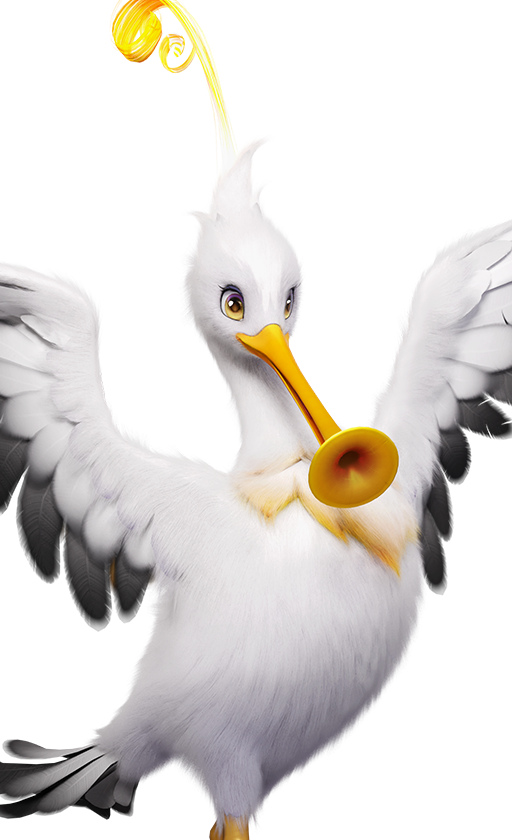
Tromber is a versatile Wind-element Support Aniimo known for its melodic playstyle and exceptional ability to act as an EP battery for the Chirpi family. By utilizing its signature 'Band Member' trait, Tromber excels in high-mobility teams, ensuring your damage dealers maintain consistent skill uptime through constant switching.
</img>
Whether you are traversing the Argent Strait or tackling complex boss encounters, Tromber provides essential Wind debuffs and crowd control. This guide covers the optimal Resonance path, equipment choices, and team compositions to maximize its efficiency in your four-Aniimo combat party.
Profile and base stats
Tromber is a Wind-element Aniimo that functions primarily as an energy-focused Support unit. As the final evolution in the Chirpi evolutionary line, it is designed to facilitate team synergy through its unique trait and role-specific utility. Beyond its standard form, Tromber exhibits regional variations, including a Beach form (Wind and Water) and a Highland form (Wind and Grass), each adapted to their respective environments in The Argent Strait, the Forest of Falling Stars, and the Zephyrus Landbridge.
Tromber’s primary role is to provide Energy (EP) management for the team. Its signature trait, Band Member, restores 20 EP to the next member of the Chirpi family switched into battle, a mechanic that triggers at most once every 20 seconds. This makes Tromber a cornerstone for teams that rely on the Chirpi family’s rhythmic skill chaining and movement buffs. While it functions as a support, it possesses a notable offensive lean in its stat distribution, favoring Attack power.
The following table outlines the base statistics for the standard Tromber form:
Stat
Value
HP
113
ATK
119
P.DEF
79
M.DEF
81
BREAK
51
REGEN
88
Total
531
Players should note that Tromber’s performance is heavily tied to its mobility skill, Take Off, which allows it to enter a Flying state to evade ground-based attacks, though this leaves it vulnerable to increased damage while airborne. Effectiveness in combat is further enhanced through the Resonance system, which allows players to raise these base stats and increase the level ceiling up to 60.
Trait and passive capabilities
Tromber features a specialized set of passive capabilities that define its utility as a dynamic support option. Its primary combat trait, Band Member, is designed to facilitate active switching strategies within a party. When Tromber is swapped out during an active battle, it immediately restores 20 Energy Points (EP) to the incoming member of the Chirpi family. This energy restoration has an internal cooldown of 20 seconds, preventing it from being continuously abused, but it remains a cornerstone for maintaining a smooth skill rotation in family-focused Wind teams. Utilizing this trait effectively is key to mastering the game's combat rhythm, as detailed in the [/guide/how-to-play](how to play) manual. You can plan these rotations using the [/guide/team-builder](team builder) to maximize your active party's efficiency, ensuring the team's overall EP economy remains healthy during intense encounters.
For movement and evasion, Tromber relies on its Take Off mobility skill. This passive ability allows Tromber to transition into a Flying state, which grants safety from standard ground-based attacks. However, this defensive option carries a high-risk trade-off, as Tromber becomes significantly more vulnerable to incoming strikes, taking increased damage while it remains airborne. Players must carefully weigh when to take flight, especially when facing enemies with powerful ranged tracking.
Passive Capabilities Comparison
Capability
Category
Core Mechanics and Effects
Limits and Drawbacks
Band Member
Combat Trait
Restores 20 EP to the next Chirpi family member switched into battle.
Can only trigger once every 20 seconds.
Take Off
Mobility Skill
Initiates the Flying state, allowing the user to dodge ground attacks.
Increases the amount of damage received while in the air.
Skill set and EP economy
Tromber functions primarily as an energy-focused support unit, utilizing a kit designed to manipulate enemy positioning and manage the team's Energy Points (EP). Its utility is heavily tied to its ability to pull enemies toward targeted locations, facilitating setup for main damage dealers. While Tromber does not directly generate massive amounts of team EP through standard attacks, its efficiency is bolstered by the "Band Member" trait. This trait restores 20 EP to the next member of the Chirpi family switched into combat, creating a synergy loop that encourages frequent rotation within the team.
The following table summarizes Tromber’s primary combat skills:
Skill
Description
EP Cost
Leaf Tornado
Deploys a leaf vortex that pulls enemies to the center. Absorbs nearby puddles for 100% bonus damage.
Community-reported
Tornado
Releases an air vortex at a target location, pulling enemies into the center.
Community-reported
Spiral Blade
Fires a Wind Bomb; a secondary explosion deals AoE damage and reduces target Wind Resistance by 3% (up to 5 stacks).
Community-reported
Water Tornado
Deploys a water vortex, pulling enemies to the center and deducting 4 Energy from each hit target.
Community-reported
Tromber’s EP economy relies on strategic switching. By timing the "Band Member" trait activation—which has a 20-second cooldown—players can maintain a steady flow of energy for the team. Furthermore, the Water Tornado skill provides a unique offensive utility by draining target energy, making Tromber particularly effective in disrupting enemy skill rotations during challenging encounters. Players should prioritize managing these cooldowns to maximize the effectiveness of the Chirpi family line.
Evolution line and regional forms
Tromber serves as the central evolution in its family line, originating from the base form Chirpi. As a versatile Support Aniimo, Tromber acts as the final stage of its specific lineage, which also includes the evolutions Cornet and Tubster.
Beyond its standard Wind-element configuration, Tromber appears in two distinct regional variants, each featuring unique elemental attributes and habitat preferences. The Beach variant incorporates the Water element, while the Highland variant adopts the Grass element. Both regional forms maintain the core support capabilities of the species, including the ability to utilize the "Take Off" mobility trait to evade ground-based attacks by entering a flying state, though this leaves them more vulnerable to incoming damage while airborne.
Form
Element
Primary Habitat
Basic
Wind
The Argent Strait
Beach
Wind / Water
Forest of Falling Stars
Highland
Wind / Grass
Zephyrus Landbridge
Players should note that while the evolution path remains consistent across these variants, the secondary elemental typing significantly alters the Aniimo's role in team compositions, particularly regarding how they interact with environmental hazards or specific elemental synergies. Regardless of the form, all members of this family share the "Band Member" trait, which provides a strategic advantage by restoring 20 EP to the next Chirpi-line family member switched into the active party, triggered at most every 20 seconds. This mechanic makes the entire evolution line highly effective for teams focused on energy management and rapid switching.
Where to find and catch Tromber
Tromber appears across several distinct biomes on the world map, with each regional variant inhabiting its own specific territory [tromber]. The standard Basic form dwells along The Argent Strait, where these melodic creatures gather to play rhythmic music in the open air [tromber]. Explorers traveling along coastal routes can encounter the dual-element Beach form within the Forest of Falling Stars, dancing in the sea breeze [tromber]. Meanwhile, the Highland variant roams the sunny ridges of the Zephyrus Landbridge, performing tunes through its flower-shaped horn alongside mountain winds [tromber].
Form
Habitat Location
Element Type
Role
Field Mobility
Basic
The Argent Strait
Wind
Support
Take Off
Beach
Forest of Falling Stars
Wind / Water
Support
Take Off
Highland
Zephyrus Landbridge
Wind / Grass
Support
Take Off
When tracking and battling Tromber in the wild, prepare for its Take Off mobility skill [tromber]. This maneuver triggers an airborne Flying state that allows Tromber to evade incoming attacks from ground-based combatants, though it sustains higher damage while suspended in flight [tromber]. To optimize capture attempts, field a partner assigned to the Break role; depleting Tromber's break gauge weakens it and makes catching it noticeably easier [team building].
Players can also acquire Tromber through evolution starting from Chirpi, as Tromber marks the final Nova milestone of that family line in the Aniimo dex [tromber]. Note that successfully catching wild Trombers will not yield regional Dewdrop Crystals for Star-Up resonance progress, so trainers looking to strengthen their new catches must source those upgrade materials from exploration, chests, or Alpha encounters instead [resonance].
Best build and equipment
Optimizing Tromber requires focusing on its role as a Wind-element support Aniimo. Because its "Band Member" trait specifically restores 20 EP to the next member of the Chirpi family switched into battle, equipment builds should prioritize maximizing this rotation utility alongside its natural ability to pull enemies and apply Wind Resistance debuffs.
Players should prioritize Resonance upgrades to boost HP and REGEN, ensuring Tromber survives long enough to cycle its skills and trigger its trait. While Tromber’s highest base stat is ATK, gear that enhances its supporting capabilities or survivability is generally preferred over pure offensive stats. When allocating resources for Resonance, note that the process is a permanent investment; always utilize the Inherit mechanic if you intend to move training progress from a lower-potential copy to a superior one before reaching higher star levels.
The following table outlines recommended build priorities for Tromber:
Equipment Component
Priority
Focus
Resonance (Star-Up)
High
HP and REGEN (Positions 3 and 6) to improve sustainability.
Ascension
High
Unlocks level caps; use Elemental Stones or Flux Crystals.
Held Items
Moderate
Items that enhance EP regeneration or skill haste.
Astranite
Moderate
Essential for mid-to-late game progression (level 20+).
As a support unit, Tromber excels when paired with other members of its family, such as Cornet and Tubster, to capitalize on their shared synergy. Avoid stacking damage-heavy gear; instead, focus on stats that allow Tromber to consistently enter the field, debuff targets with Spiral Blade, and feed Energy back into your team's primary damage dealers. Always verify your party coverage via the team builder before committing rare materials to a specific build.
Partners and team compositions
Tromber shines brightest when paired with other members of its /creatures/evolutions family. In a standard four-member combat party, constructing a unified Wind-element lineup yields exceptional synergy. This strategy relies on rapid switching to maximize the "Band Member" trait. When you rotate Tromber out, it automatically restores 20 EP to the incoming family member, with a 20-second cooldown.
Within this setup, Chirpi, Tubster, and Tromber work together to stack movement speed buffs. The primary damage dealer, Cornet, then consumes these accumulated buffs to unleash devastating attacks. Tubster serves as the dedicated shield breaker, draining the enemy's break gauge to open windows for Cornet's burst damage. Meanwhile, Chirpi functions as the primary Energy provider, utilizing its own family-focused switching traits to keep the entire party's skill rotation fluid. This composition swaps out a traditional healer for Tromber's utility once your team can survive without dedicated healing.
To plan your ideal party layout, you can use the [/guide/team-builder](team builder) to check your overall elemental coverage. The table below details the optimal Wind team setup based on closed-beta configurations.
Slot
Aniimo
Role
Key Synergy
DPS
Cornet
Damage
Consumes accumulated movement buffs to execute high-damage attacks.
Break
Tubster
Break
Drains the enemy break gauge and helps stack movement buffs.
Support
Tromber
Support
Restores 20 EP to family members upon switching; builds movement speed.
Energy
Chirpi
Energy/Regen
Replenishes party EP and triggers family-switch energy recovery.
Performance in boss fights vs open world
Tromber demonstrates distinct combat functions when shifting between open-world exploration and instanced boss encounters. In the field, Tromber excels as a crowd-control specialist. Its signature abilities—Tornado, Leaf Tornado, and Water Tornado—generate ground vortexes that drag dispersed groups of enemies together while dealing sustained damage. The Highland form’s Leaf Tornado continuously absorbs nearby puddles to deal 100% bonus damage, while the Beach form’s Water Tornado drains four Energy per hit. Combined with the Take Off mobility skill to bypass incoming ground strikes, Tromber effortlessly corrals standard wild packs.
Against massive boss targets, the displacement pull of Tornado becomes ineffective, pivoting Tromber's role toward offensive support and energy management. Tromber applies vital team debuffs through Spiral Blade, triggering a secondary explosion that reduces enemy Wind Resistance by 3% per stack, capping at five stacks for 20 seconds. When planning synergies in the [/guide/team-builder](team builder), Tromber's Band Member trait also restores 20 EP every 20 seconds when swapping into another Chirpi family member, preventing party skill exhaustion during extended engagements. Players should reference the [/creatures/element-chart](element chart) to pair these Wind debuffs effectively against target affinities.
Setting
Pros
Cons
Open World
• Vortex abilities pull and group mobs reliably • Take Off evades grounded strikes • Leaf Tornado gains 100% bonus damage from puddles
• Suffers increased damage while airborne • Lower personal damage outside puddle absorption
Boss Fights
• Spiral Blade stacks 15% Wind Resistance shred • Band Member feeds 20 EP to Chirpi family members • Operates effectively with quick swap rotations
• Vortex skills cannot pull heavy boss units • Band Member EP restoration restricted to Chirpi lineage
Frequently asked questions
What is Resonance and how does it affect Tromber?
Resonance is the primary star-based system used to increase an Aniimo's base stats and raise its level cap to 60. It consists of two phases: Star-Up, where you fill six positions using regional Dewdrop Crystals, and Ascension, which moves the Aniimo to the next stage once the level requirement is met. For a support-focused Aniimo like Tromber, Resonance is essential for pushing its HP and REGEN stats higher to ensure survivability during extended combat. Note that Resonance investments are permanent and cannot be refunded.
How do I unlock the Resonance system?
To access Resonance, you must reach the "Intermediate Student" title, successfully complete the "Promotion: Dewdrop Crystal's Resonance" story mission, and pass the related quiz administered by Dr. Lewis. Once unlocked, you can access the system via the Training menu within Aniimo Management.
Can I use catching to farm materials for Resonance?
No. While catching provides various benefits, it does not yield the Dewdrop Crystals required for Star-Up positions. These must be obtained by exploring specific regions, opening chests, or defeating Alpha Aniimo of the corresponding type.
What is the role of Astranite in the later stages?
Astranite serves as a vital material for late-game Ascension, acting as a stand-in for specific rare items. It is categorized into tiers based on level bands: Basic (levels 20–30), Standard (40–50), and Advanced (54–60).
Are Tromber's base stats the same across all regional forms?
While community-reported data suggests a consistent base stat total of 531 for the standard Tromber, players should be aware that Beach and Highland forms may have different elemental affinities (Wind/Water and Wind/Grass, respectively) which can influence their performance in specific team compositions.
Does switching Tromber in battle offer any specific advantages?
Yes. Tromber features the "Band Member" trait, which restores 20 EP to the next member of the Chirpi family switched into the field. This effect is limited to once every 20 seconds. Using this mechanic is vital for maintaining an efficient EP economy within a team.


 </img>